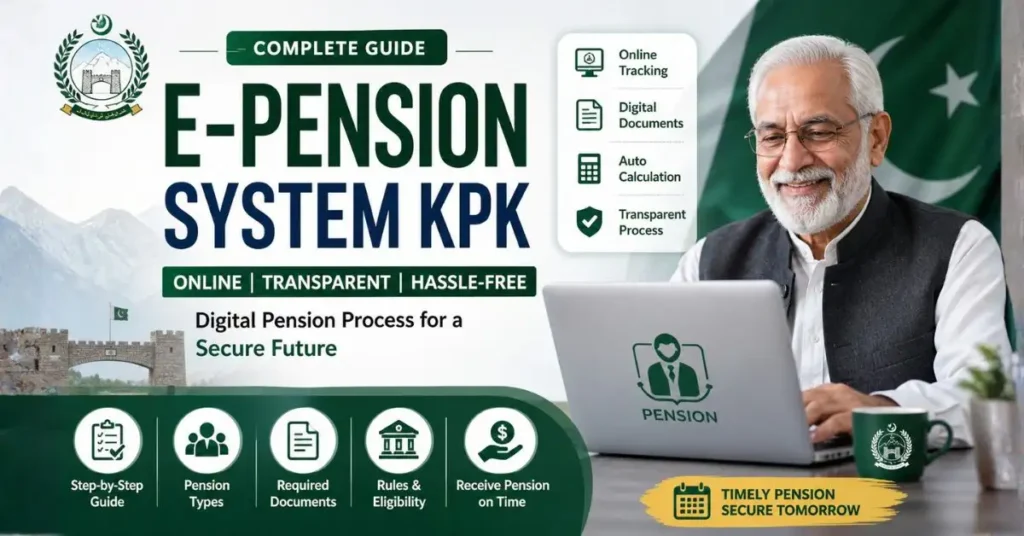
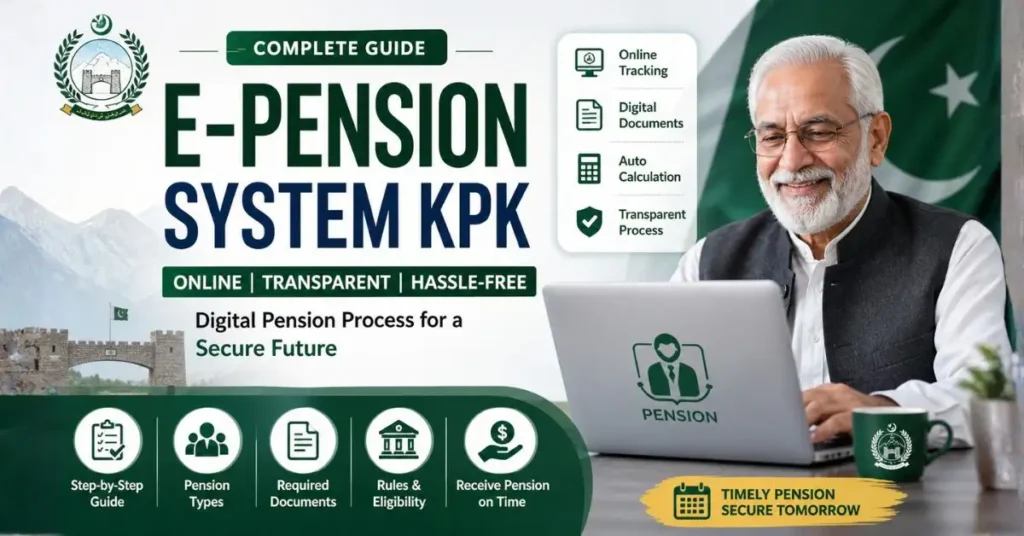
What is the E-Pension System KPK?
The KP E&SE E-Pension system is an online platform for managing pension cases of education department employees, including:
- Teachers (SST, CT, Subject Specialists)
- Headmasters and Principals
- Administrative staff
It allows departments to initiate, process, and track pension cases digitally, reducing reliance on manual paperwork.
👉 According to official sources, the government has approved and launched e-pension systems to streamline pension processing for employees.
E-Pension KP = Digital processing + Faster approvals + Online tracking
Key Features of the KP E-Pension System
🧾 1. Digital Pension Case Management
- Departments can create and manage pension cases online
- Employee service data is stored centrally
⚙️ 2. Integration with HR Systems
- Connected with HRIS and education databases
- Ensures accurate service records
📊 3. Automated Processing
- Generates pension documents digitally
- Reduces manual errors
🔍 4. Case Tracking
- Employees and departments can track pension status
🔐 5. Secure Login-Based System
- Accessible through official login credentials
- Ensures data privacy and control
Types of Pension in KPK (As per Rules 2021)
The Khyber Pakhtunkhwa Civil Servants Pension Rules 2021 define multiple pension categories:
- Superannuation Pension
Given at retirement age (usually 60 years).
- Retiring Pension
After 25 years of service or early retirement conditions.
- Invalid Pension
For employees unable to work due to medical reasons.
- Compensation Pension
When a job is abolished.
- Family Pension
Given to spouse or dependents after death.
👉 These categories ensure financial protection in all service scenarios.
Step-by-Step Guide: How E-Pension System Works
Here is the complete workflow of E-Pension KP:
Step 1: Login to Portal
- Authorized department staff log in via the portal

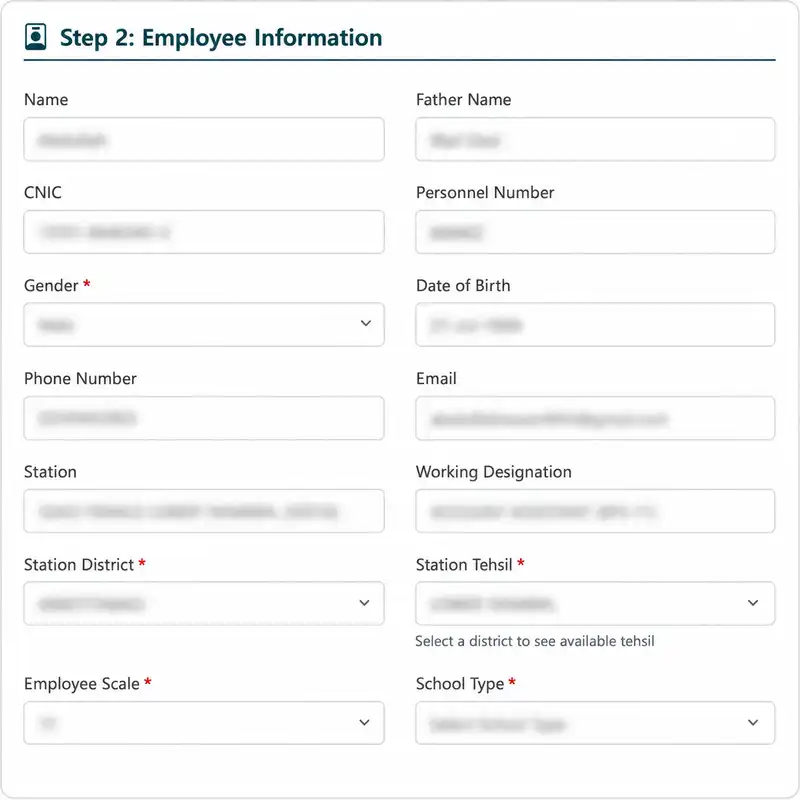
Step 2: Add Employee Record
- Enter teacher/staff details
- Service history and retirement data
Step 3: Upload Documents
- CNIC, service book, LPC, retirement notification

Step 4: System Processing
- Automated pension calculation and form generation
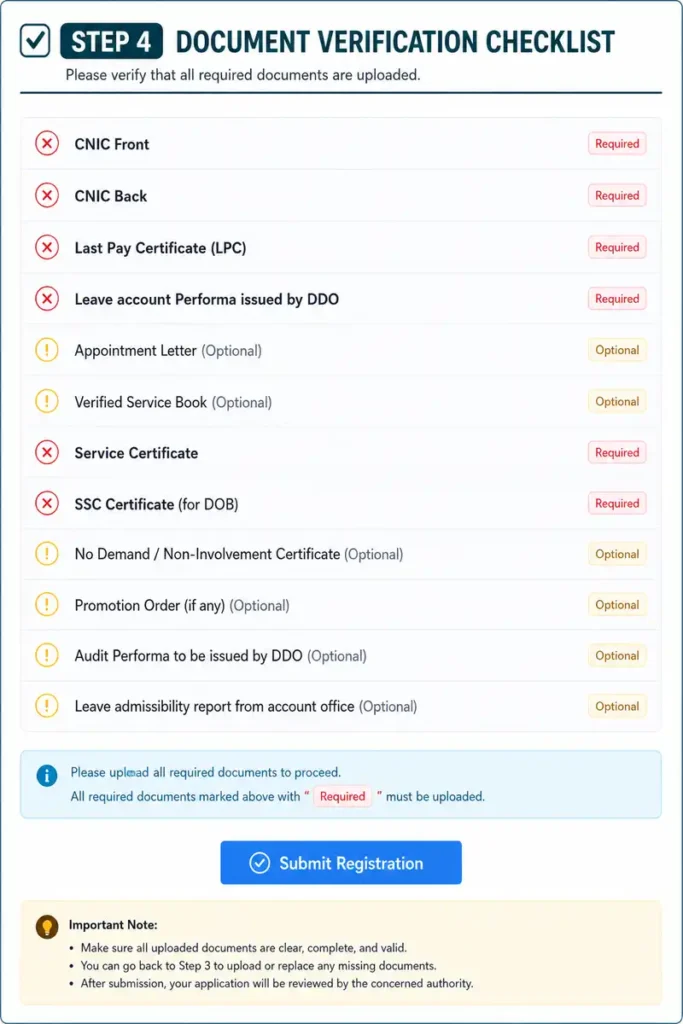
Step 5: Verification
- Department verifies all entered data
Step 6: Submission to Accounts Office
- Case is forwarded digitally
Step 7: Final Approval & Payment
- Pension is released to the employee
- Approved by Accountant General KP
👉 This process eliminates traditional delays of months or years.
Required Documents for Pension in KPK
To successfully apply for the E-Pension system, make sure you have scanned copies of the following documents ready:
- CNIC (Front)
- CNIC (Back)
- Leave Account Performa issued by DDO
- Appointment Letter (Optional)
- Verified Service Book (Optional)
- Service Certificate
- SSC Certificate (for Date of Birth)
- No Demand / Non-Involvement Certificate (Optional)
- Promotion Order (if any) (Optional)
- Audit Performa issued by DDO (Optional)
- Leave Admissibility Report from Accounts Office (Optional)
⚠️ Important Note:
- Documents must be in PDF, JPG, JPEG, or PNG format
- Maximum size: 700KB per file
- Exceptions:
- Appointment Letter / Service Certificate → up to 1MB
- Verified Service Book → up to 2MB
👉 Keeping these documents ready in advance ensures a smooth and delay-free pension application process.
🔗 How It Connects with the Main E-Pension System
The KP E&SE portal works as a department-level system, while:
- PMRU Khyber Pakhtunkhwa system prepares pension envelopes
- Accountant General Khyber Pakhtunkhwa handles final approval and payments
👉 Together, they form a complete pension ecosystem:
AG KP → Approval & Payment
Department (E&SE Portal) → Data Entry & Processing
PMRU System → Document Automation
New Contributory Pension System (After 2022)
KPK has introduced a Contributory Pension Scheme for new employees.
🔑 Key Highlights:
Employee contributes 10% of salary
Government contributes 12%
Managed by pension fund companies
Investment-based pension system
👉 This system is different from traditional pensions and ensures long-term sustainability.
Benefits of E-Pension System KPK
🚀 1. Faster Pension Processing
No more waiting for months after retirement.
🔍 2. Transparency
Every step is trackable online.
📉 3. Error Reduction
Automated calculations reduce mistakes.
📂 4. Paperless System
Less dependency on physical files.
💰 5. Financial Security
Ensures timely pension payments.
Common Problems Solved by E-Pension KP
Before digitization, employees faced:
Delayed pension approvals
Missing service records
Manual calculation errors
Lack of transparency
👉 The E-Pension system directly solves these issues.
Important Links (Official Sources)
For accurate and updated information:
PMRU Pension System
AG KPK Pension Portal
KP Pension Rules 2021
These are official platforms for pension processing and rules.
Tips for Employees (Avoid Delays)
Keep service record updated
Verify personal data regularly
Complete documentation early
Track pension status online
👉 Early preparation = Faster pension approval
Future of E-Pension in KPK
The Government of KP is continuously improving:
Integration with banking systems
Mobile tracking apps
Real-time dashboards
AI-based verification
👉 The goal is a fully automated pension ecosystem
Conclusion
The E-Pension System KPK is a major step toward digital governance, ensuring that government employees receive their pensions quickly, transparently, and without hassle. By combining automation, pre-retirement processing, and clear legal rules under the KP Pension Rules 2021, the system eliminates traditional inefficiencies and improves financial security for retirees.
Whether you are a government employee or nearing retirement, understanding this system helps you prepare better, avoid delays, and secure your future income smoothly.
Frequently Asked Questions (FAQs)
How can I apply for E-Pension in KPK online?
Employees can apply through the E-Pension portal by logging in, verifying details, uploading documents, and submitting the case before retirement. The system allows submission even months before retirement to avoid delays.
What documents are required for E-Pension KPK?
Required documents include CNIC copies, service book, LPC, SSC certificate, and leave account performa, while some documents like appointment letter or audit performa are optional depending on the case.
How is pension calculated in KPK E-Pension system?
Pension is calculated automatically based on service length and last pay using the system’s built-in calculator, aligned with KPK Civil Servants Pension Rules 2021.
What is E-Pension?
E-Pension is the online pension system for government employees in Khyber Pakhtunkhwa. Pension cases are prepared and tracked through it, from the retirement papers to the payment of pension. If you are nearing retirement, your pension case will pass through this system, so it is worth understanding what it records and what it needs from you.
How pension is worked out
Gross pension is worked out by the formula (Basic Pay multiplied by 7 multiplied by Years of Service) divided by 300. Thirty years of service gives 70 percent of basic pay as pension. For example, a basic pay of Rs. 58,200 with 30 years of service gives a gross pension of Rs. 40,740 a month. You can commute a part of your pension into a lump sum: up to 35 percent for your own pension, and up to 25 percent for a family pension.
Pension increase 2026
Pensioners received an increase of 7 percent on the net pension drawn on 30 June 2026. The increase took effect on 1 July 2026, under Finance Department notification number SO(SR-II)FD/2-4/2026/Pension, dated 22 July 2026. The Special Additional Pension is not included in this increase.
Keep your service record, your leave account and your GP Fund balance in order before you retire. A paper that is missing, or a figure that does not match the record, can delay a pension case, and those are easier to fix before you retire than after.