EEF Marriage Grant KPK 2026: Rs. 30,000 for Education Employees and Their Children
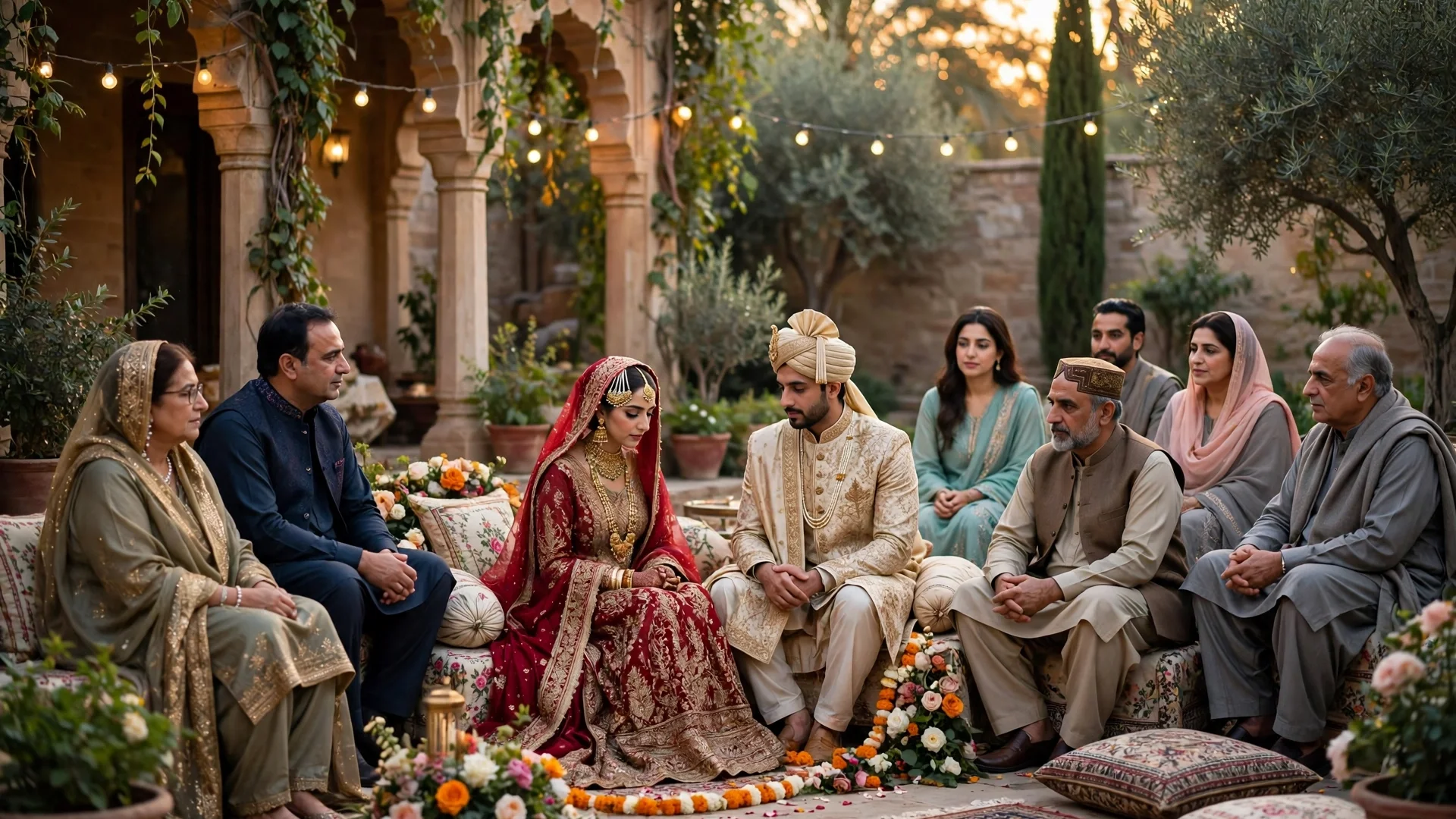
The Khyber Pakhtunkhwa Education Employees Foundation (EEF) pays a one-time marriage grant of Rs. 30,000 to an education employee, or to one of his or her children, on marriage. The grant is given only once, and only where the employee has at least twenty years of service. The Foundation’s own letter circulating the revised form says plainly that most education employees are unaware of this grant — which is why many eligible families never apply for it.
This guide explains who can get the grant, what it is worth, which documents are needed, and how to apply, using the Foundation’s own rules and its 5 March 2024 letter. Nothing here is taken from a rumour or a social media post: every figure and condition comes from the KP Education Employees Foundation Welfare and Financial Assistance Regulations, 2021, or from the Foundation’s letter itself.
The grant in brief
- Amount: Rs. 30,000, paid once.
- Who it is for: an education employee, for his or her own marriage, or for the marriage of one of his or her children — a son or a daughter.
- Service condition: the employee must have at least twenty years of service.
- How often: only once. If the grant has already been paid, whether for the employee’s own marriage or for one child’s marriage, it cannot be claimed again.
- Time limit: the application must be made within two years of the date of Nikah.
- Legal basis: Section 4 of the Khyber Pakhtunkhwa Education Employees Foundation Act, 2018, and Regulation 10 of the KP Education Employees Foundation Welfare and Financial Assistance Regulations, 2021.
The grant is a welfare payment, not a loan. It is paid out of the Foundation’s funds, which are built from the monthly contributions of education employees themselves. That is the point of the Foundation: employees contribute during service, and the Foundation pays back in the form of scholarships, marriage grants, retirement assistance, and medical assistance.

Who is eligible
Regulation 10 of the 2021 Regulations states the rule in two parts. First, an education employee or his children, as the case may be, are entitled to the marriage grant. Second, the grant is given only once, and only to those education employees, or their children, where the employee has at least twenty years of service.
Three points in that rule matter in practice.
The twenty-year service condition is the hard condition. It is the employee’s service that counts, not the child’s. An employee with nineteen years of service does not qualify, even if everything else is in order. The condition is stated twice in the Foundation’s own documents — once in Regulation 10(2) and again in the 5 March 2024 letter — so there is no doubt about it. It is also the condition employees complain about most: many feel twenty years is too long, and some have argued publicly that a shorter period should be enough. Whatever the argument, twenty years is the rule as it stands, and an application that does not meet it will not be approved.
The grant is for one marriage only. The words “only once” mean what they say. If an employee takes the grant for his own marriage, he cannot take it again for a child’s marriage. If it is taken for one child’s marriage, it cannot be taken for another child’s marriage. The application form requires an affidavit on stamp paper, in original, stating that the applicant has not earlier been given the marriage grant. That affidavit exists precisely because the grant is once in a lifetime.
The rule does not say the employee must still be in service. What it requires is twenty years of service. The application form itself asks for the dates of birth, appointment, and retirement, which shows that retired employees apply on the same form. A retired employee who completed twenty years of service is therefore within the words of the rule. What matters is the length of service and the contribution record, not whether the employee is still on duty on the day of the application.
Who counts as an education employee
The Foundation covers the employees of the education departments affiliated with it. According to the Foundation’s own description, these are:
- The Directorate of Higher Education — all postgraduate, degree, and inter colleges in Khyber Pakhtunkhwa.
- The Directorate of Elementary and Secondary Education — all government higher, high, middle, and primary schools.
- The Directorate of Technical Education — all government technical colleges, polytechnic institutes, vocational institutes, commercial training institutes, and commerce colleges.
- The Directorate of Curriculum and Teachers Education — all regional institutes of teacher education.
- The Directorate of Education for the merged districts, and the employees under the supervision of KP-TEVTA who were contributors to the Foundation’s fund before the 2018 Act.
In other words, a college lecturer and a primary school teacher are both covered, provided they are registered with the Foundation and contribute to its fund. The pay slip showing contribution to the Foundation’s fund is one of the required documents, and it is how the Foundation checks that the applicant is a contributor.
How much is the grant
The amount is Rs. 30,000, paid once. It is fixed in Schedule-III of the 2021 Regulations, which lists the limit of financial assistance on account of marriage grant as Rs. 30,000. Regulation 10(1) says the employee or his children are entitled to the amount notified by the Board as per Schedule-III, and Schedule-III states the figure.
Two things about the amount should be kept clear. First, it is a single lump-sum payment, not a monthly amount. Second, it should not be confused with the Khyber Pakhtunkhwa Zakat Department’s marriage assistance, which is also Rs. 30,000. That is a different scheme altogether: the Zakat marriage assistance is paid to an unmarried woman whose family cannot afford her wedding, through the Local Zakat Committee, and it has nothing to do with the Education Employees Foundation. The two figures happen to be the same, but they are two separate grants from two separate departments, with different rules and different application routes. An education employee should apply for the EEF grant through the Foundation, not through the Zakat Committee.
The two-year limit
The application for the marriage grant must be made within two years of the date of Nikah. The Foundation’s 5 March 2024 letter states this plainly in a note at the end: the application shall be made within a period of two years from the date of Nikah. Regulation 11(4) states the same two-year limit for applications made on behalf of the children of a deceased employee.
This is the deadline applicants most often miss. A family that waits three years after the Nikah to apply will be out of time, even if the twenty-year service condition is met and all documents are in order. The safe course is to apply as soon as the Nikah Nama has been issued by NADRA, and not to leave it for later.
If the employee has died
Regulation 11 deals with the case where the education employee dies during service. In that case, his children are entitled to the marriage grant under the Regulations. The children, or their guardian, apply on the prescribed form, and the application must be accompanied by the death certificate of the deceased employee, in addition to the standard documents. The same two-year limit applies: the application must be made within two years of the date of Nikah.
The Foundation’s letter also lists additional documents for the death case, including the death notification of the employee. Families in this situation should attach the death certificate and, where asked, the other papers that establish the employee’s service and the children’s relationship to him.
Documents required
Regulation 10(4) lists the documents that must accompany the application. Attested copies are required, except for the service certificate and the affidavit, which must be in original. The list is:

- National Identity Card of the education employee.
- Service card of the education employee.
- Pay slip showing contribution to the Foundation’s fund.
- A certificate of service from the head of the institute, in original.
- National Identity Card or Form-B of the child.
- Computerised Nikah Nama in respect of the education employee or the child, as the case may be, issued by NADRA.
- Registration number issued by the Foundation.
- Affidavit on stamp paper, in original, to the effect that the applicant has not earlier been given the marriage grant.
- Cheque book leaf (copy).
The cheque book leaf is listed in the Foundation’s letter and on the application form, because the grant is paid into the applicant’s bank account. The form asks for the account title, the IBAN, and the branch name and address, so the bank details must be ready before the form is filled.
Three of these documents cause the most delays. The service certificate must be in original, signed by the head of the institute — a photocopy will not do. The affidavit must also be in original, on stamp paper. And the Nikah Nama must be the computerised one issued by NADRA; a Nikah Nama from the Nikah Registrar alone is not enough, and the form has a separate attestation section for the Nikah Registrar. Applicants should get these three papers first, before filling the rest of the form, because they take the longest to arrange.
How to apply
The application is made on the Foundation’s revised Marriage Grant application form. The form was circulated with the Foundation’s letter No. EEF/433/2017/Marriage Grant, dated Peshawar, 5 March 2024, signed by Ibadat Said Wardak, who was then Administrative Officer of the Foundation. The letter was sent to the Director General of Commerce Education and Management Sciences, the Director of Higher Education, the Director of Elementary and Secondary Education, and the other directors, with instructions to circulate the form among the offices and institutions under their control. The letter also says the form can be obtained through the Foundation’s Facebook account, facebook.com/EEF.KP.
The steps are:
1. Get the form. Obtain the revised Marriage Grant application form from the Foundation’s office in Peshawar, from your institution or district education office, or from the Foundation’s Facebook page. Use the revised form, not an older version.
2. Fill the form. The form asks for the employee’s name, father’s name, designation, BPS, dates of birth, appointment, and retirement, length of service, EEF registration number, and place of posting. It then asks for the groom or bride’s name, relation with the employee, CNIC, and date of Nikah, followed by contact and postal addresses, and the bank account details. The form also has a section for widow or widower information, where applicable. Fill every field. An incomplete form is returned.
3. Attach the documents. Attach the attested copies listed above, with the service certificate and the affidavit in original, and a copy of the cheque book leaf.
4. Get the attestations. The form has attestation sections for the head of the institute (Director, DEO, or Principal), for the Secretary of the Union Council, Village Council, or Neighbourhood Council, and for the Nikah Registrar, each with signature and seal. All three attestations should be completed before submission.
5. Submit through the proper channel. Submit the form to the Foundation’s office through the proper channel, duly attested, as the letter directs. The application goes to the Managing Director of the Foundation.
6. Scrutiny and approval. The Managing Director marks the application to the concerned section, which scrutinises it and checks whether it is properly filled and accompanied by the required documents. If it is correct and complete in all respects, it is placed before the Managing Director for approval. If it is incorrectly filled or a document is missing, the Managing Director returns it with advice to remove the deficiency or fill it correctly. On approval, the amount is issued in the manner determined by the Managing Director. The Regulations fix no time limit for how long the payment takes after approval, so applicants should keep a record of the date of submission.
There is no online application for this grant. The form is a paper form, and it is submitted through the departmental channel. Applicants should keep a copy of the submitted form and a record of the date of submission.
Where to get the form and where to ask
- Foundation office: Education Employees Foundation, Office Building of the Directorate General Commerce Education and Management Sciences, Rano Garhi, Chamkani Chowk, G.T Road, Peshawar.
- Phone: 091-9214390 (as given on the Foundation’s website and on the scholarship form). The letterhead also lists 091-9214370 and 091-9214380.
- Email: [email protected].
- Website: https://kpeefhed.gkp.pk
- Facebook: facebook.com/EEF.KP
The Foundation’s letter also asked the HEMIS Cell of the Higher Education Department and the EMIS Cell of the Elementary and Secondary Education Department to upload the letter and the form on their official websites, so the form may also be available through those offices.
Mistakes that cost applicants the grant
Waiting too long. The two-year limit from the date of Nikah is absolute. Apply as soon as the NADRA Nikah Nama is available.
Applying twice. The grant is once in a lifetime. The affidavit on stamp paper is a sworn statement that the grant has not been taken before. A second application will be caught at scrutiny.
Photocopies where originals are required. The service certificate from the head of the institute and the affidavit on stamp paper must be in original. Attested photocopies are not accepted for these two.
A non-computerised Nikah Nama. The Regulations require a computerised Nikah Nama issued by NADRA. An ordinary Nikah Nama will not satisfy the requirement.
Missing the contribution proof. The pay slip must show contribution to the Foundation’s fund. An employee who is not a contributor to the fund is not covered by the Foundation’s schemes.
Using the wrong scheme. The EEF marriage grant and the Zakat marriage assistance are different. Do not apply to the Zakat Committee for the EEF grant, and do not send an EEF application to the Zakat office.
What the grant does not cover
The grant is for the marriage of the employee or of one child. It does not cover the marriages of two children, and it does not cover any other family event. It is also separate from the Foundation’s other schemes: the merit scholarships for children studying in SSC, HSSC, and Bachelor classes; the Talent Support Scholarship for position holders; the cash awards for top position holders; the retirement assistance; and the medical assistance. Each scheme has its own rules, its own form, and its own conditions, and an application for one is not an application for another.
Sources
- The Khyber Pakhtunkhwa Education Employees Foundation Welfare and Financial Assistance Regulations, 2021 (Notification No. EEF/357/2021/Rules/Regulations, dated Peshawar, 11 October 2021), Regulations 10 and 11 and Schedule-III — https://hed.gkp.pk/uploads/KP-EEF%20WELFARE%20AND%20FINANCIAL%20ASSISTANCE%20REGULATIONS%202021.pdf
- Letter No. EEF/433/2017/Marriage Grant, dated Peshawar, 5 March 2024, from the Education Employees Foundation, circulating the revised Marriage Grant application form.
- The Khyber Pakhtunkhwa Education Employees Foundation Act, 2018 (Khyber Pakhtunkhwa Act No. VI of 2019), Section 4.
- Education Employees Foundation, Higher Education, Archives and Libraries Department, Government of Khyber Pakhtunkhwa — https://kpeefhed.gkp.pk
Frequently asked questions
How much is the EEF marriage grant? Rs. 30,000, paid once, as fixed in Schedule-III of the 2021 Regulations.
Who can get it? An education employee, for his or her own marriage, or for the marriage of one of his or her children — a son or a daughter. The employee must have at least twenty years of service, and the grant is given only once.
Can a retired employee apply? The Regulations require twenty years of service; they do not say the employee must still be in service. The form itself asks for the date of retirement. A retired employee who completed twenty years of service is within the words of the rule.
What if the employee has died? If the employee died during service, his children are entitled to the marriage grant under Regulation 11. The application must include the death certificate, and it must be made within two years of the date of Nikah.
How long do I have to apply? Within two years of the date of Nikah. After that, the application is out of time.
Is this the same as the Zakat marriage grant? No. The Zakat Department’s marriage assistance is also Rs. 30,000, but it is a different scheme, paid through the Local Zakat Committee to an unmarried woman whose family cannot afford her wedding. The EEF grant is for education employees and their children, and it is applied for through the Foundation.
Where do I get the form? From the Foundation’s office in Peshawar, from your institution or district education office, or from the Foundation’s Facebook page, facebook.com/EEF.KP.